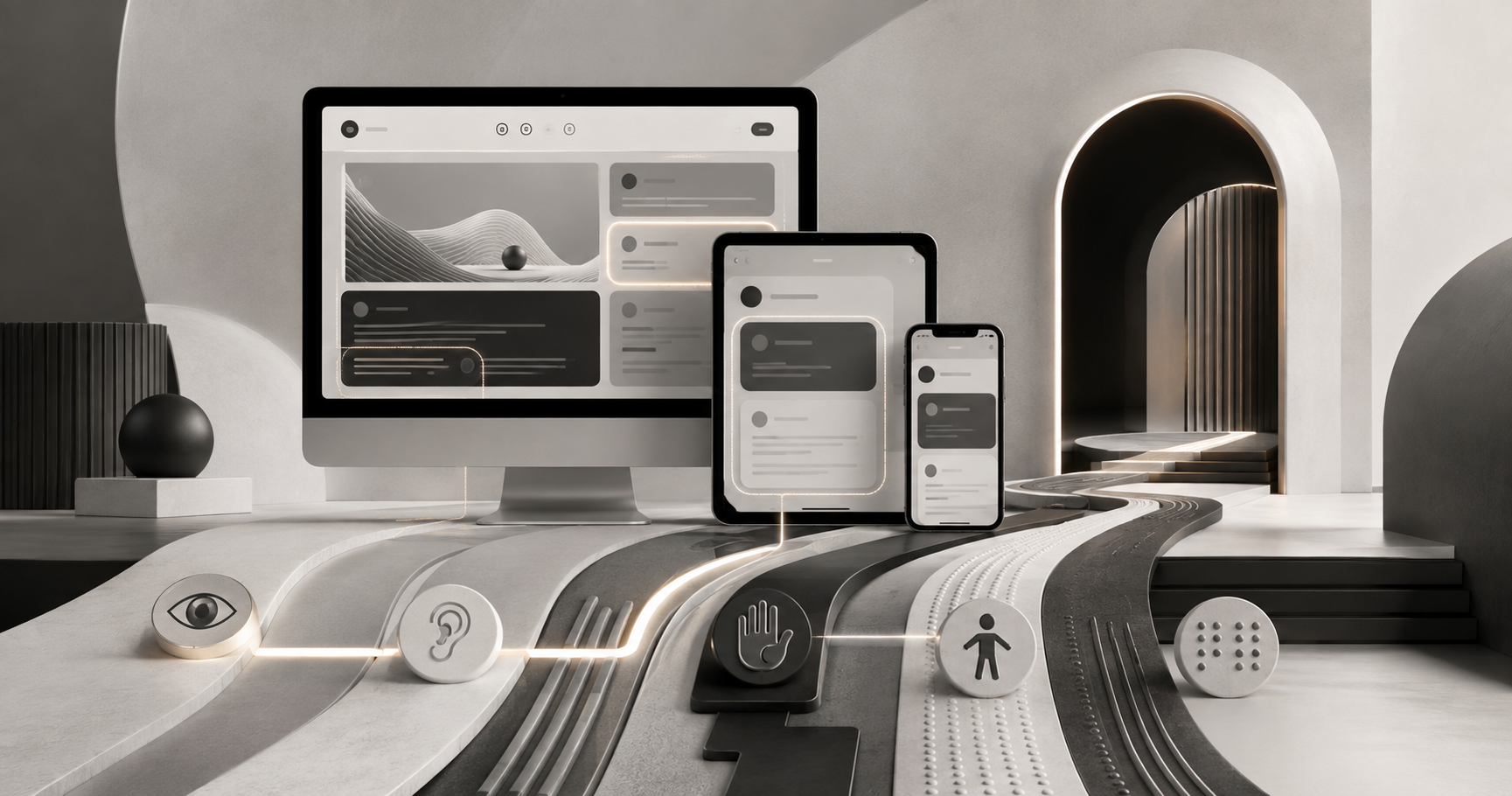
The federal government has established a clear digital-accessibility standard for organizations receiving financial assistance from the Department of Health and Human Services. CauseWorkHub is being built to give nonprofits the affordable operating system they need to meet it.
Under HHS’s updated Section 504 rule, covered web content and mobile applications must conform to WCAG 2.1 Level A and Level AA. HHS moved the technical-compliance deadlines by one year, but the obligation remains.
CauseWorkHub is the solution.
Instead of forcing each nonprofit to assemble accessibility plugins, separate form products, compliance spreadsheets and disconnected remediation records, CauseWorkHub brings the accessible experience and the work required to maintain it into one nonprofit operating system.
The revised federal deadlines
The rule applies to programs and activities receiving HHS financial assistance. That can include grants, loans, cooperative agreements, certain contracts, subgrants, services and property. Community health, behavioral-health, child-welfare, disability, aging, recovery and human-service nonprofits may all have covered programs depending on their funding relationships.
Why ordinary nonprofit software leaves the organization holding the problem
A nonprofit can purchase a CRM, a form builder, a case platform, a document system, a project tool and a mobile app—and still have no reliable answer when leadership asks:
- Which public workflows have actually been tested?
- Which form failed, and which users are affected?
- Who owns the correction?
- Was the correction verified?
- Which software release resolved it?
- Where is the evidence?
The problem is fragmentation. Accessibility becomes another manual compliance project because the experience, the responsible people, the remediation work and the evidence live in different places.
CauseWorkHub connects the experience to the proof
The product itself is being built to the standard
CauseWorkHub is being designed and formally validated against WCAG 2.1 AA. Its core interface, PWA, authentication, forms, help and role-based workflows will be tested as complete experiences—not declared compliant merely because individual screens look responsive.
System Health will make accessibility status visible
CauseWorkHub’s product-status discipline distinguishes what is available, what is being configured, what is committed and what remains future work. Accessibility validation will follow the same rule. Tested, passed, failed, remediated and unverified cannot mean the same thing.
Failures become accountable work
When a form, document or workflow has an accessibility problem, CauseWorkHub can connect the finding to the relevant workspace, assign corrective work, preserve discussion and evidence, and record verification. The organization does not need to recreate that accountability in another platform.
Updates carry corrections forward
CauseWorkHub’s controlled release and secure-update model means a correction to a shared component can move into supported installations through an official product update. Nonprofits do not have to independently repair the same underlying product defect twenty different ways.
The system helps prevent new failures
First-party components can enforce accessible structure where possible and warn authors when content introduces risks such as missing image alternatives, inadequate contrast, broken heading order or inaccessible link language. Prevention is cheaper than repeatedly auditing the same avoidable mistakes.
We will meet the deadline well ahead of time.
CauseWorkHub will meet the applicable WCAG 2.1 AA technical standard well ahead of the federal deadline. CauseWork will publish the validation status and will not claim completion until complete task-based and assistive-technology testing proves it.
What remains the nonprofit’s responsibility
CauseWorkHub can make the product, its forms and its built-in workflows accessible by design. The nonprofit still controls its own words, branding, uploaded files, images, video, connected services and external website. CauseWorkHub will help prevent, identify and manage accessibility failures in that content, but no responsible software company should promise compliance for material it has never seen.
That boundary is not a weakness. It is the difference between an honest operating system and an accessibility badge that promises more than it can prove.
The deadline is a product requirement—not a marketing slogan
HHS gave covered recipients more time. CauseWork is using that time to make accessibility part of the product backbone: the interface, the forms, the PWA, the work, the governance, the evidence and the update path.
CauseWorkHub is the solution because it does not separate accessible service delivery from the organizational responsibility required to sustain it.